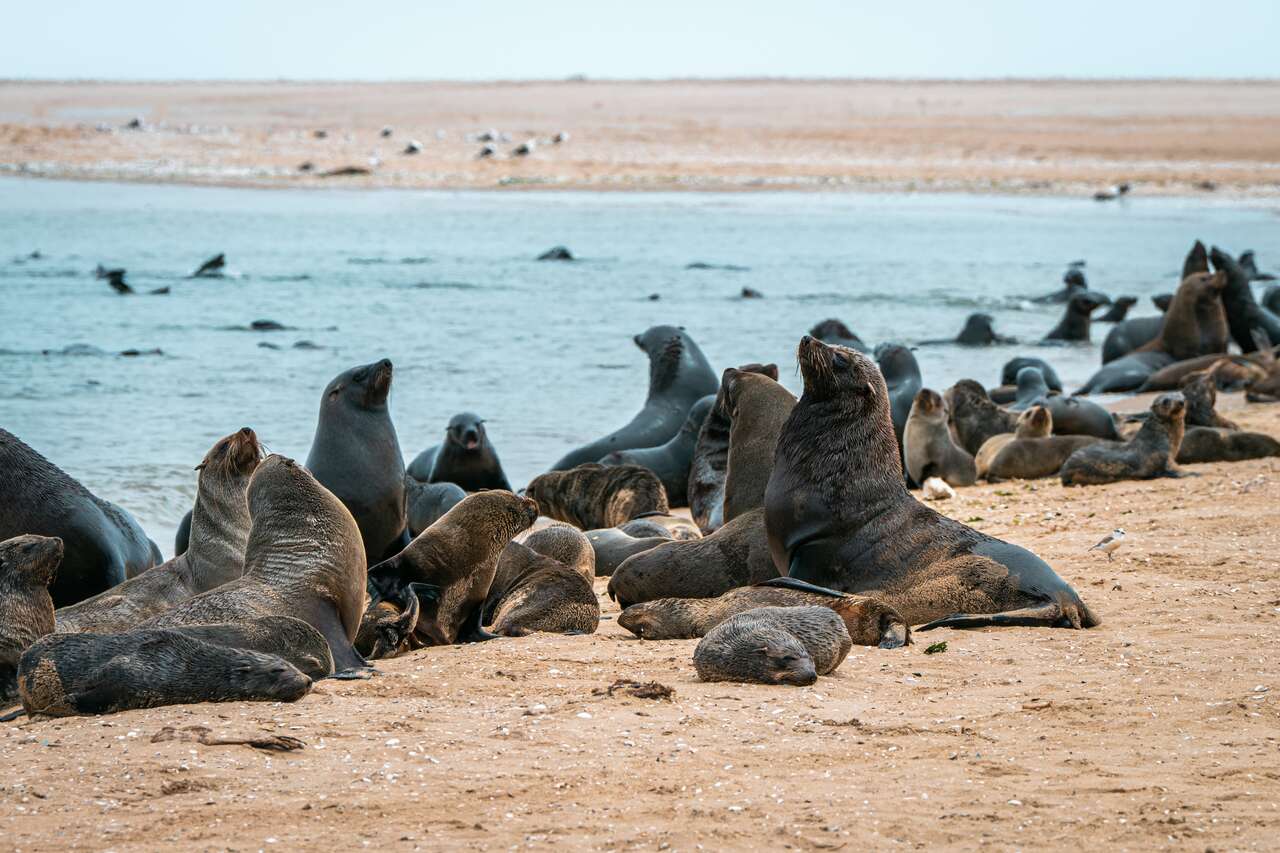
Seal Colony Shoreline
08:00–12:00
Position your camera at water level to capture seals interacting near the kayak; a wide angle lens works best here.

Pelican Point's kayak excursions place you within arm's reach of one of Africa's largest Cape fur seal colonies, and the resulting photographs are unlike anything shot from shore. The challenge is balancing paddle rhythm with camera readiness while salt spray and curious seals test your equipment. This guide maps the photo opportunities that unfold during a typical guided tour and the practical steps that keep your camera operational in open water.
Quick answer
Pelican point kayaking photos are best captured during the morning departure window between 08:00 and 12:00, when low-angle sunlight illuminates seal faces and the water remains calm enough for stable handheld shooting. A waterproof action camera or a sealed phone case handles the splash zone during close seal encounters, while a mirrorless body in a dry bag captures wider lagoon compositions during calmer stretches. The colony's peak activity occurs near the haul-out rocks roughly 45 minutes into most guided routes.
Cape fur seals are among the ocean's most photogenic subjects, but photographing them from a kayak introduces variables that landlocked wildlife shooters rarely confront. Your platform drifts, the subject moves in three dimensions, and every piece of gear must survive immersion. The reward is a perspective unavailable from Pelican Point's beaches: eye-level frames of seals porpoising through turquoise shallows, backlit whiskers as juveniles surface alongside your hull, and the layered chaos of the haul-out rocks where hundreds of animals cluster within a few meters of your bow. Most guided tours depart from the Walvis Bay lagoon and paddle northwest along the peninsula's sheltered side, reaching the main seal colony after roughly 40 to 50 minutes of steady progress. The journey itself offers compositional variety: flamingo flocks against the Namib dunes, the skeletal remains of shipwrecks half-buried in sand, and the shifting geometries of kayak groups framed by the peninsula's low spine. Photographers working with interchangeable lenses often pack a 24-70mm or 16-35mm range; longer telephotos are difficult to stabilize in a bobbing kayak and unnecessary given how close seals approach. Action cameras mounted to the kayak deck or chest harness capture continuous POV footage, freeing your hands for paddling during the most dynamic sequences. Light quality dictates which frames succeed. Early launches benefit from golden-hour glow on the dunes and crisp cross-light on seal fur, while midday sun flattens contrast and introduces harsh shadows. Waterproof housings fog internally when temperature differentials are steep, so allow cameras to acclimate before sealing them. The seals themselves are unpredictable collaborators: juveniles investigate paddles and hulls with enough curiosity to fill a memory card in minutes, while adults haul out in stacked compositions that reward patient framing. Burst mode handles erratic movement, but the most compelling images often come from anticipating a seal's surfacing trajectory rather than reacting to it. Guides familiar with the colony's rhythms position groups near high-activity zones, creating windows where photography and paddling can alternate rather than compete. Pelican point kayaking photos work best when shooting discipline matches the environment. Keep one camera body accessible in a tethered dry bag or secured chest pouch rather than buried in a hatch, accept that some frames will be lost to spray or motion blur, and prioritize the handful of moments when light, subject, and stability converge. The resulting images carry a kinetic intimacy that drone or telephoto perspectives cannot replicate.
“The most compelling images come from anticipating a seal's surfacing trajectory rather than reacting to it.”
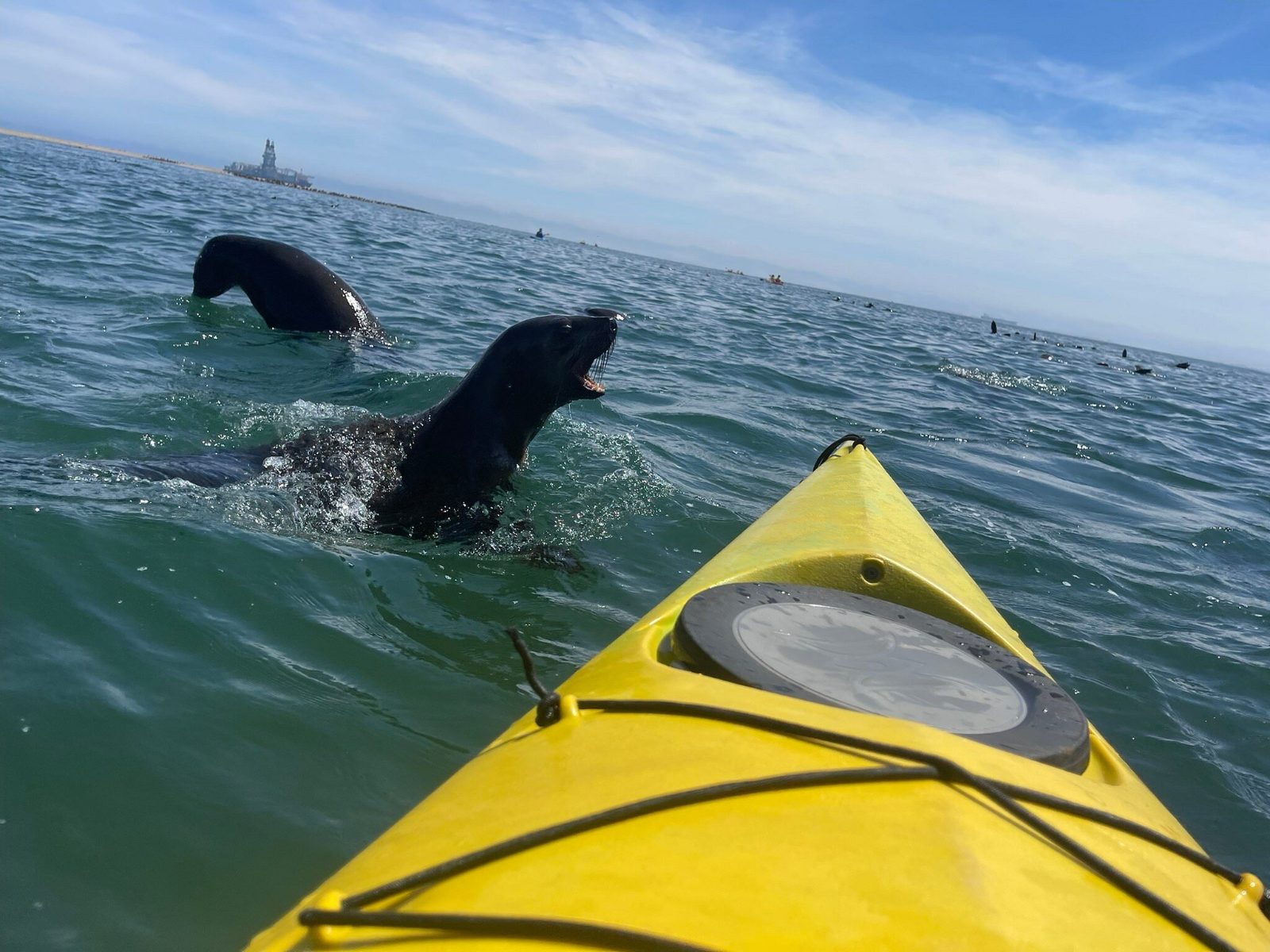
08:00–12:00
Position your camera at water level to capture seals interacting near the kayak; a wide angle lens works best here.
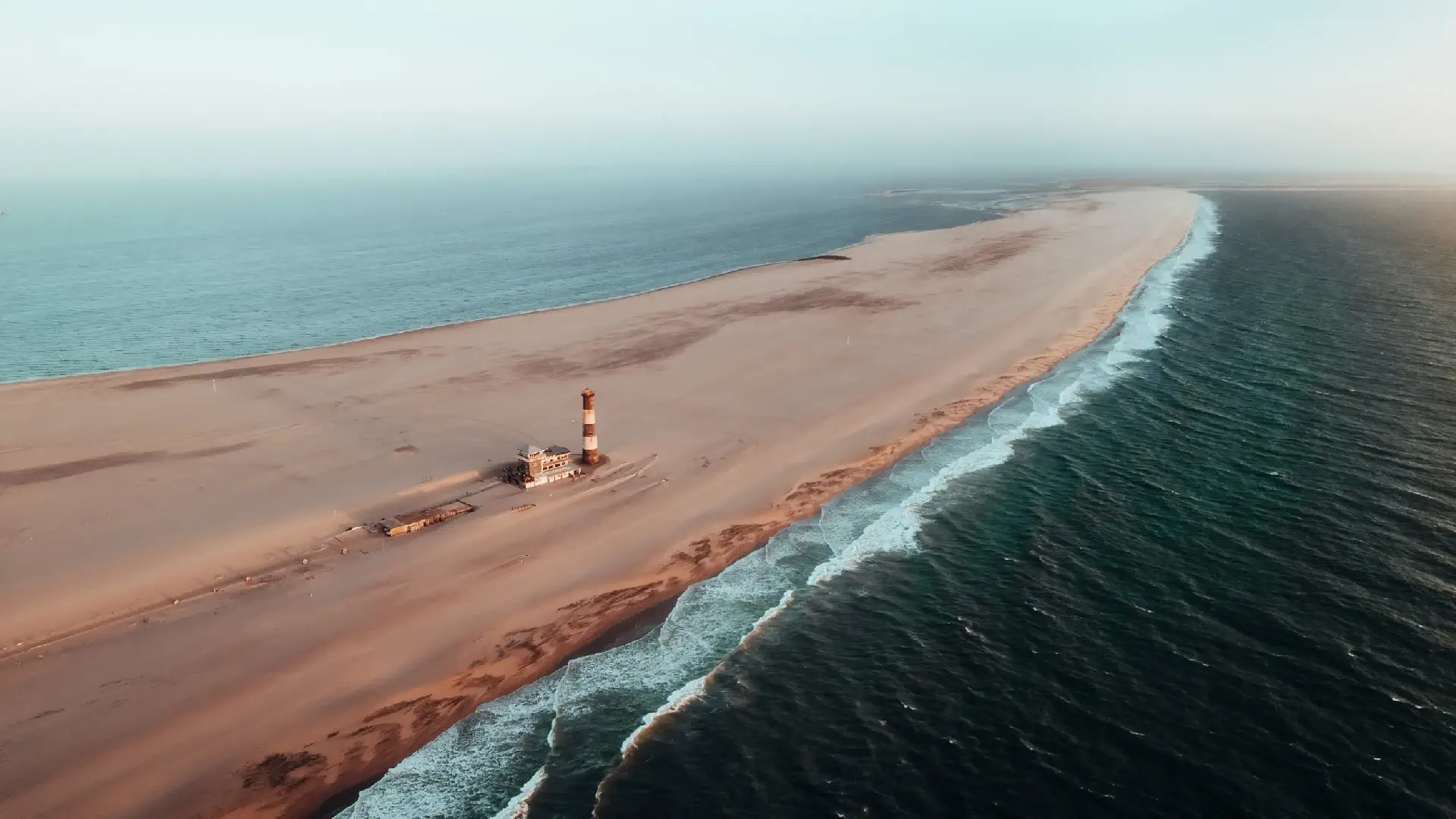
08:00–12:00
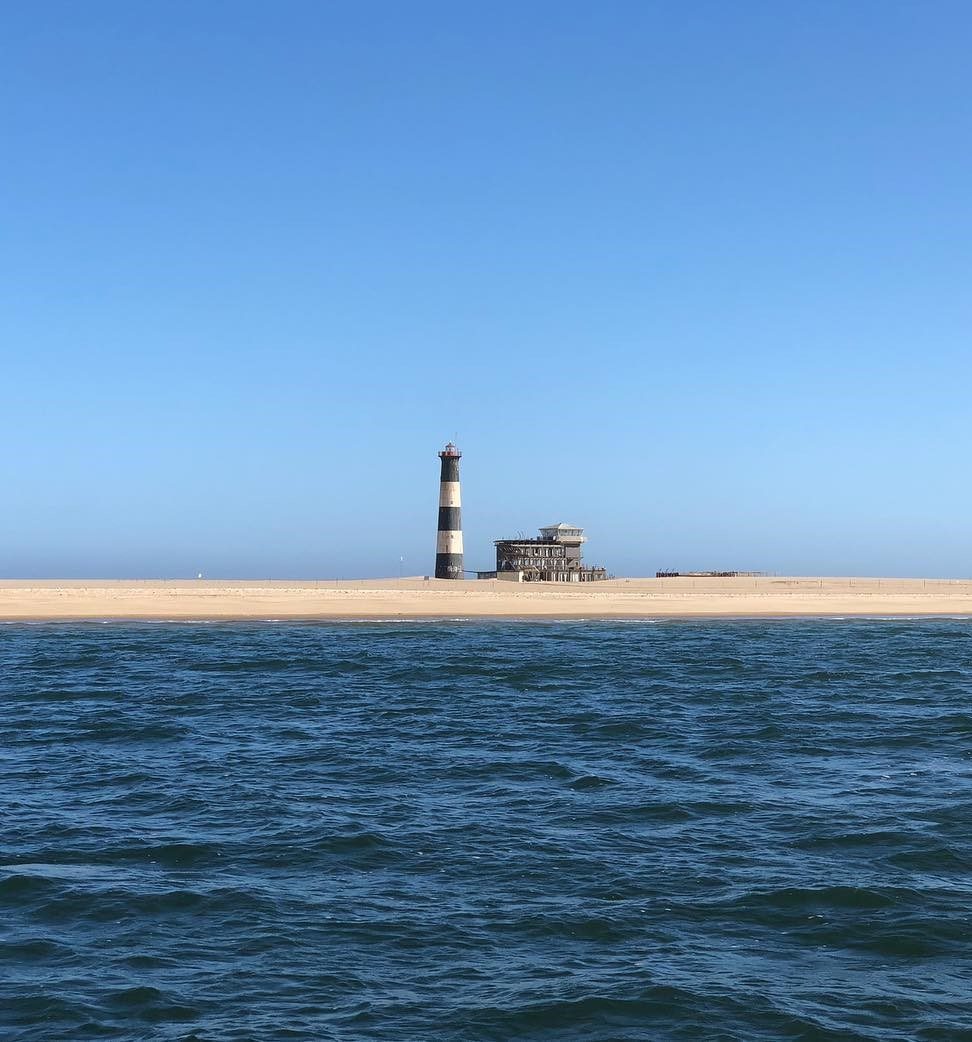
Capture the contrast of the historic lighthouse against the desert sand and Atlantic ocean; best photographed from the water.
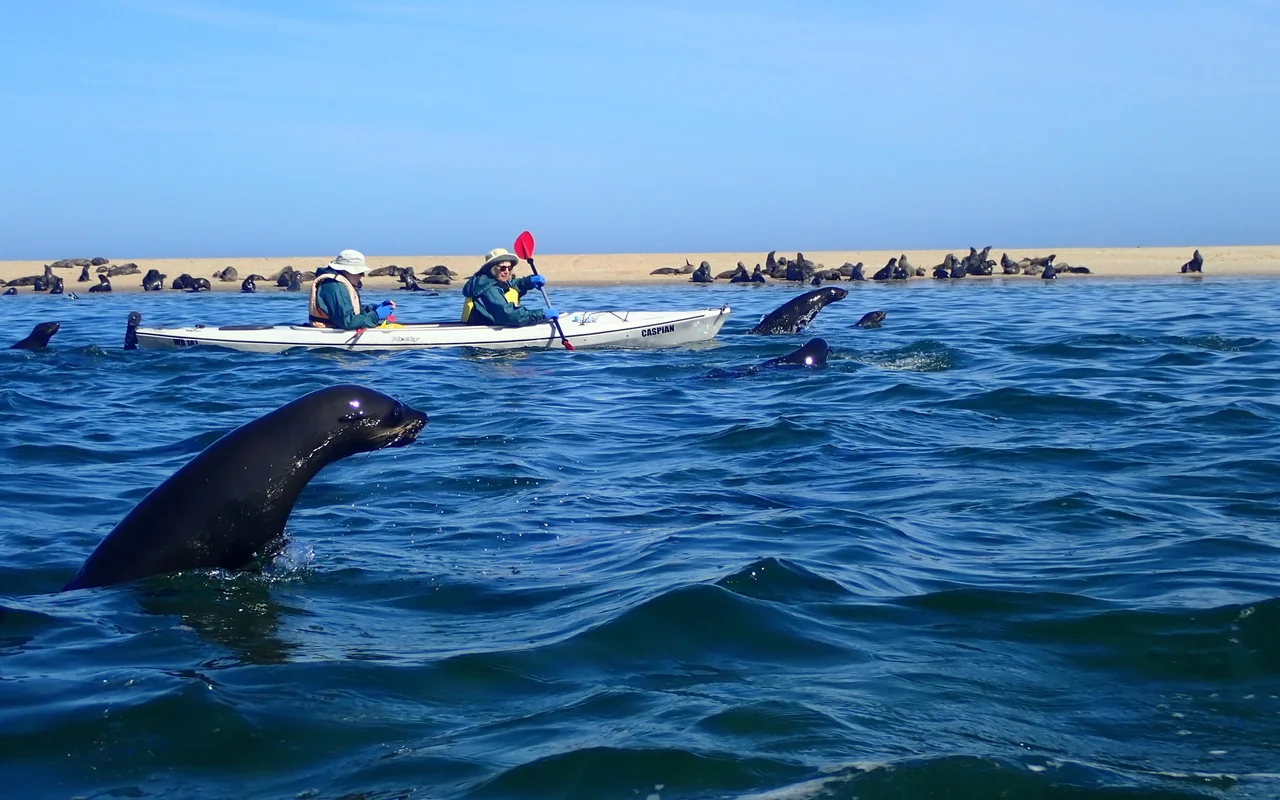
08:00–12:00
Use the front of the kayak to frame the expansive horizon and marine life for a sense of scale.
08:00–12:00
Shoot at the water's edge where the peninsula meets the lagoon to capture reflections of the sky and wildlife.
The best arrival window is 08:00–12:00, as morning hours provide the softest light for photography and the calmest water conditions for kayaking near the seal colonies. Planning your session during this period minimizes wind interference and maximizes visibility.
Warm, occasional morning fog; 16–22°C
Clearer skies often follow morning fog, providing stable lighting for detailed seal imagery.
Cooler, crisp air; 12–18°C
The cooler temperatures result in calmer seas and consistent visibility for morning kayaking.
—
Visiting mid-week during the early arrival window ensures less congestion on the water for clearer composition.
Verdict: The concrete best slot for photography is Tuesday to Thursday, arriving between 08:00 and 09:00, during the months of April or October.
Pelican Point is open daily to facilitate kayaking activities on the peninsula.
Access to the beach area at Pelican Point is free of charge. Participation in kayaking activities requires a booked guided tour, as independent access to the kayaking area is not permitted.
Verdict: While beach access is 0 NAD, actual costs depend on the specific guided tour package booked through an authorized operator.
Pelican Point Peninsula is located at the end of a sand spit in Walvis Bay, Namibia. Access to the kayak launch point is primarily via 4x4 vehicle due to the sandy terrain along the peninsula.
C28 to Walvis Bay, then coastal tracks to Pelican Point
Private transfer from Walvis Bay city center
Water taxi from Walvis Bay Waterfront
As the peninsula requires navigating soft sand, visitors are advised to use high-clearance 4x4 vehicles or coordinate transport through a local operator. Confirm your meeting point at the Pelican Point Peninsula entrance prior to arrival.
Photographing seals from a kayak requires respect for wildlife boundaries and attention to your guide's instructions. Proper conduct protects the animals and ensures safe, rewarding images.
Everything you need to know about pelican point kayaking photos
Access to the peninsula is restricted to booked guided tours, which are necessary to reach the launch site safely. These tours provide the transport and local expertise required to document the area. Planning your visit through a tour operator ensures you reach the prime spots for your pelican point kayaking photos.
The best arrival window is 08:00–12:00, as morning hours offer the best light and calmest waters for your excursion. Calm conditions are essential for stable photography while paddling among the seals. This early timeframe consistently yields the highest quality pelican point kayaking photos.
Yes, most tour operators provide dry bags or water-resistant storage to protect your equipment while on the water. It is recommended to verify these amenities with your specific provider when booking. Using these provided bags ensures your gear remains dry while you capture your pelican point kayaking photos.
You are welcome to bring your own camera, though many guests choose to utilize the waterproof cameras provided by guides. If you bring your own, ensure it is secured in a dry bag during the actual paddle. Many professional photographers rely on these setups to ensure their equipment is ready for the perfect shot.
Many guided tours include a service where the guide takes photos with a waterproof camera during the activity. These high-quality images are often emailed to guests after the trip, providing a great perspective of the wildlife. This allows you to focus on the experience while still getting excellent pelican point kayaking photos.
Your shots will often feature large colonies of Cape fur seals, which are known to be curious and playful near the kayaks. You may also capture images of flamingos, pelicans, and cormorants in the wetlands during your drive to the point. Occasionally, dolphins are spotted, adding variety to your wildlife photography collection.
The route to the peninsula features the Walvis Bay Lagoon and expansive salt pans with vibrant pink waters, both of which are excellent for nature photography. These coastal landscapes provide a dramatic backdrop where the desert meets the ocean. Incorporating these landmarks into your itinerary will complement the images you take on the water.
Pelican Point Kayaking Reviews
Read more Tickets & toursPelican Point Seal Kayaking
Read more Tickets & toursPelican Point Kayaking Tours
Read more GuidePelican Point Kayaking Namibia
Read more Tickets & toursWalvis Bay Pelican Point Kayaking Tours
Read more GuidePelican Point Kayaking Prices & Options
Read more